Monday, June 16, 2014

Son of the Morning Star (1991)


This film covers two perspectives on the Battle of Little Bighorn, or Custer's Last stand, the native American view and the American view.  The film can pretty much be considered an epic, with the huge battles, vast vistas and comprehensive native American cast.  It's hard to imagine how they created the scene showing the vast native American camp shown just before the Battle of Little Bighorn.

The way the film is broken up into segments makes it seem like it could be divided into two seperate films, which could stand on their own, each showing a different perspective.

The film gives great insight into Custer, as most films show him as either incompetent or a monster.  Here we see him as a multifaceted person, showing his wife and family life, as well as delving into his history prior to his last stand.   It also shows a bit of his "flamboyant" nature, as he spent a great deal of effort on his hair, as well as wearing uniforms completely different from his regiment.

From this film, we are told that Custer was known by many names to the native Americans.  Some of those names included "Long Hair" and "Son of the Morning Star", hence the name of this film.

This is the kind of film that should be required viewing for high school history students. It gives insight into the actions of the US against the native Americans, as well the the motivations for the reactions on both sides.

Dean Stockwell appears in this film, who appeared in Quantum Leap as well as reoccurring characters in Star Trek: Enterprise.

Unfortunately, this film has not been release on DVD or any digital format, as the only release of this film is on VHS.
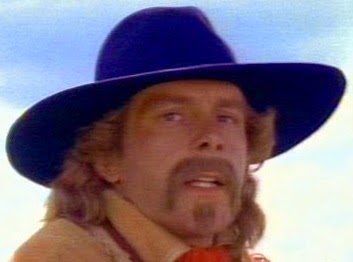

While watching this film, it's hard to look at Custer and not recall Ben Stiller's character from Dodgeball: A True Underdog Story, as they both had the same mustache and type of face.

Sunday, June 15, 2014

Saving Otter 501 (2013)

Strangely this movie was a bit disappointing.  While I LOVE otters, and just recently learned that they were considered extinct for about 50 years, due to hunting by humans, this film was less informative and engaging than other videos I have seen on sea otters.

I stumbled upon this movie, after reading an article about CED disks that said they often had extra material recorded on their reverse sides on, which was included without making the buyer aware it was included.  One of the people said they had an episode of "The Undersea World of Jacques Cousteau: The Unsinkable Sea Otter".  I of course know of Jacques Cousteau's reputation as filmmaker of marine life films and due to my love of otters, I tracked down a copy of that episode.  The episode opened my eyes to the so called "Great Hunt" of sea otters, which decimated the population, appearing to have rendered them extinct for 50 years.

While, it wasn't as informative about sea otters as the Jacques Cousteau's film and other sources, and also the story wasn't as compelling, it was great to see the baby sea otter and watch her recovery, "education" and release, as well as wonderful to find out about the conservation work the Monterey Bay Aquarium is doing.  Observant watchers will notice that the Monterey Bay Aquarium was featured in the the film Star Trek IV: The Voyage Home as the Cetacean Institute.

Thursday, May 15, 2014

The Amazing Dr Clitterhouse (1938)

As I had just recently discovered Edward Robinson, and was not only amazed at his performance but also surprised to find that he had worked in an number of films with Humphrey Bogart.  This film seemed especially odd, as I had never even heard of it's existance and it's rather odd title.  Is Clitterhouse an actual family name??

This film was amazing to watch as it was a completely different character for Edward Robinson, and to see him and Humphrey Bogart essentially switch roles from the film Key Largo.  Edward Robinson plays such a refined and well spoken doctor, it's hard to believe that he is the same actor who practically created the persona of 30's gangsters.

Big Star: Nothing Can Hurt Me (2012)

This one I got to in a round about way.  It all started with Charles Laquidara, the DJ from Boston, who was on WBCN for a decades.  He played the song "Alex Chilton" by the Replacements  many years back as one of his featured and recommend songs.  I thought the song was fantastic, bought the CD "Pleased to Meet Me" for that song alone, and it has ranked as one of my favorite songs ever since.

I was under the impression that Alex Chilton was a music producer (which he was) but knew nothing of his work as a musician.

MANY, MANY years later, after hearing that the theme song for "That's 70's Show" was written by Alex Chilton for his band Big Star, was I made aware of the band Big Star.  After getting hold of their albums and listening to them, they didn't really make a big impression on me and I didn't see the magic in them or know that they had a cult following.

Once I found out about this film, I watched it at the first chance I got.  It was through watching it that Big Star finally made a big impression on me and I came to understand the relevance of Alex Chilton.

The movie is a bit hard to follow at times, and it may lack appeal for those who have no knowledge or interest in Big Star.  The reason the film is hard to follow is that at times the it was hard to understand the relevance of some of the people who spoke or were spoken about by their relatives, as their names and relevance may not sink in with their names only being shown in their initial introduction.  It took a while to realize (after reviewing the film and checking on line) that the person whom they kept coming back to throughout the film was the drummer (and last surviving member of Big Star) Jody Stephens.

I have found the songs "September Gurls" and "I Am the Cosmos" to be especially outstanding.

I was quite depressed to learn of the passing of Alex Chilton in 2010 (as well as Andy Hummel the bassist for Big Star) and also that Chris Bell had died tragically in 1978.

While a number of great event took place for me in 2010, there were also a large number of tragic events (as the passing of two member of Big Star, as listed above), including the passing of both Robert Culp and Stephen J Cannell (of the Greatest American Hero and a large number of other projects) in that same year.

Key Largo (1948)

After watching Little Caesar and finding that Edward Robinson was a big actor in the 30s and 40s with a lot of films to his credit, I decided to check out more of his films.  I was quite surprised to find he was in a film with Humphrey Bogart (as it turns out, several films).

I thought I had watched a lot of Humphrey Bogart films, and even thought I had seen this one before, but after the first few seconds I realized I had never seen a second of this film.

This film is another excellent example of film noir.  I expected to see more of the Florida Keys, but little was shown. While the stars and their acting was good, the ending was a bit of a case of deus ex machina, but was saved by the fact that Humphrey Bogart's character is one of the few characters (in any movie) who acted extremely intelligently in his confrontation with this villain of the picture.

Little Caesar (1931)

After watching Scarface (1931) I read a little about the Hays Code, and pre-code films as well as pre-code gangster movies.  There was a list of three films that were considered a seminal part of the gangster film genre, as well as the first gangster film "Underworld".

While a very good film in its own right, the performance of Edward Robinson as gangster was outstanding, setting the style for 30's gangsters in film.  Even those who have never seen a gangster film will recognize Edward Robinson's likeness as Rocky in the Bugs Bunny cartoon Racketeer Rabbit.

Thursday, May 1, 2014

The Year of Living Dangerously (1982)

After watching, The Act of Killing (2012), I thought I should go back and watching this film, which covers historical events in Indonesia.  This film has a certainly noteworthy cast, featuring Mel Gibson and Sigourney Weaver.

It is a decent film but lacks a great deal of depth of the historical events which unfold around the characters, at the same time without giving any real feeling for the character's or their feeling for each other.  This film has been labeled a love story, but there if very little love nor emotions in the main characters on again, off again, relationship.

One other point is there is a lack of films about Indonesia, so this film should be lauded for giving exposure to a country and historical events that are often overlooked.  Made by an Australian film company, it is a subject that no Hollywood has shown no interest in.

This film seemed to barely make back the cost it took to produces the film.  I thought the film had an impressive reputation, but I feel that it may be almost unknown.

One reviewer back in 1983 said "If this film doesn't make an international star of Mr. Gibson, then nothing will.", but I don't know how widely known this film is, and it doesn't seem a lot of Mel Gibson fans even acknowledge this film.