Wednesday, July 9, 2014

The Cobbler and the Thief: Recobbled Cut Mark IV (2013)

I had seen a few things posted on line about this film, but really knew nothing about it.  Apparently this film had been in production for nearly 3 decades.  While at least 3 versions of the film have been released, some with additional dialogue and even songs, this is supposed to be as close to the original vision of the director Richard Williams.

The film, epecially the animation style is very odd.  Each character has such a unique look, as if they were each done by an independant studio.  It' hard to understand if the Cobber's black and white coloring (though color is used sometimes) is intentional or just unfinished.  Some of the character are so "stylized"  that they seem unreal, while it seems only the princess looks like an actual human.  The Vizier looks like a combination of Jafar and Genie from Disney's Aladdin, so much so that you would think the producer could sue.

The film is mostly without dialogue, and strangely the villian has the majority of the dialogue and is voiced by Vincent Price.

There are also a lot of scenes that are somewhat long with character's running around in stylized rooms or being flung around and nearly and oblivisously avoiding death while chaos rains around them.

While this film is a great accomplishment, especially for Garrett Gilchrist, it lacks appeal for modern audiences. While a lot of great animation has been made in the last few years, it has been lacking variations in style a bit.  Though that does not detract from the appeal of modern animation (which really has been pretty much entirely CGI), it does show that there are a lot of other possible styles, like those used in this film.

I would like to see the two other versions of this film and compare them to Richard William's original vision.

Millennium Actress (2001)

After watching The Wind Rises, I read some material about the film, and someone made a reference to this film, Millennium Actress, which was supposed to be a great Japanese animated film.  I had never heard of it before, so I decided to check it out.

The film has a bit of an odd feel to it.  The animation was less soft or appealing that is usual with most Japanese animated films.  Still the story, and the constant changing of setting made making this film animated the only way to keep the budget low.  Except for that, there is really no reason this film needed to be an animated film.

The film had really left you lacking as the ending .  It's one of those cases where the so called "McGuffin", the item (or person) people are searching for is supposedly irrelevant.  It's the chase that makes the story.  But we are lead to beleive their is some great significant purpose for that McGuffin.  The real answer comes from the fact that both the character and the director is capable of stating that something is important, when they don't have anything to justify why give it such status.

A friend of mine felt the same way about the ark in Raider's of the Lost Ark, but I only partially recognized her point.  After all, it was one of the greatest chases ever made and you did get to see what the power of the ark was capable of, but if the ark was supposedly left to be used by the America's it would either have changed history or resulted in everyone having to keep their eyes closed for 10 minutes each time it was opened (even the enemy could do that).

風立ちぬ The Wind Rises (2013)

I had watched nearly all of Miyazaki's movies, with the exception of the latest, Howl's Moving Castle and a hand full his older films, mostly those predating Nausicaa of the Valley of the Wind.

A co-worker had told me of this film, which was what inspired me to watch it, and her explanation about the "theme" song of the film Hikokigumo by Yuming.  Honestly, I only know Yuming from her song "Koibito ga Santa Kurozu", which a friend of mine sent to me on a mix tape, many years ago.  I do have a bit of a bone to pick with this being called a "theme" song.   The song is merely tacked on to the end credits, a place where any song will do.   This is the same problem with Batman Forever's inclusion of A Kiss from a Rose and even Time Bandits' Dream Away (a song that REALLY didn't fit the theme of the movie) 

Since Hikoigumo was written 4 decades before the film was created,  I realize that it wouldn't match the action in the film,  it's expected that the theme song would be at the beginning of the film or at lease during the film, where it captures the feel of some of the action taking place on the screen.

Anyhow, this was a pretty good film, but it lacked the feel of a Miyazaki film.  There weren't any strange creatures and a minimum of odd machines.  Those odd machines that did appear were only in dream sequences, but even then they bothered me a bit, as they often showed odd working of engines that seemed to demonstrate a lack of knowledge of how engines operate on the part of the director.

The story of the main character is certainly a worthy one, based on the real life and real accomplishments of Jiro Horikoshi.  Learning of this man was a great history lesson.

One big problem I had with the film was that tacked on love story. First, the love the characters supposedly felt never seemed authentic.  They instantaneously met and married, with out any indication of their love.  Then as their story continued, they but still have no actions that revealed they felt any love for each other.  And finally, not only was the story but it is not an actual event that took place in Jiro's life.  His actual wife never suffered tubculosis nor stayed in a santarium.  This was just a story that Miyazaki had read and decided to tack on to this film in an attempt to give the film a love story and perhaps depth (a cheap attempt to get an academy award?), but it felt like a failed attempt to pull at our heart strings.

One other odd thing was that the machine sounds all appeared to be made by people's mouths.  Perhaps this was an attempt at a unique style, but it sounded like elementary school kids making engine noises.

Monday, June 16, 2014

Son of the Morning Star (1991)


This film covers two perspectives on the Battle of Little Bighorn, or Custer's Last stand, the native American view and the American view.  The film can pretty much be considered an epic, with the huge battles, vast vistas and comprehensive native American cast.  It's hard to imagine how they created the scene showing the vast native American camp shown just before the Battle of Little Bighorn.

The way the film is broken up into segments makes it seem like it could be divided into two seperate films, which could stand on their own, each showing a different perspective.

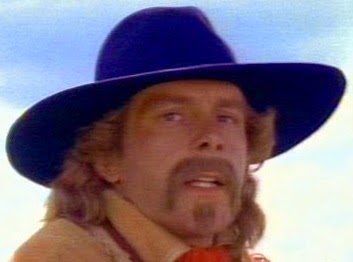
The film gives great insight into Custer, as most films show him as either incompetent or a monster.  Here we see him as a multifaceted person, showing his wife and family life, as well as delving into his history prior to his last stand.   It also shows a bit of his "flamboyant" nature, as he spent a great deal of effort on his hair, as well as wearing uniforms completely different from his regiment.

From this film, we are told that Custer was known by many names to the native Americans.  Some of those names included "Long Hair" and "Son of the Morning Star", hence the name of this film.

This is the kind of film that should be required viewing for high school history students. It gives insight into the actions of the US against the native Americans, as well the the motivations for the reactions on both sides.

Dean Stockwell appears in this film, who appeared in Quantum Leap as well as reoccurring characters in Star Trek: Enterprise.

Unfortunately, this film has not been release on DVD or any digital format, as the only release of this film is on VHS.


While watching this film, it's hard to look at Custer and not recall Ben Stiller's character from Dodgeball: A True Underdog Story, as they both had the same mustache and type of face.

Sunday, June 15, 2014

Saving Otter 501 (2013)

Strangely this movie was a bit disappointing.  While I LOVE otters, and just recently learned that they were considered extinct for about 50 years, due to hunting by humans, this film was less informative and engaging than other videos I have seen on sea otters.

I stumbled upon this movie, after reading an article about CED disks that said they often had extra material recorded on their reverse sides on, which was included without making the buyer aware it was included.  One of the people said they had an episode of "The Undersea World of Jacques Cousteau: The Unsinkable Sea Otter".  I of course know of Jacques Cousteau's reputation as filmmaker of marine life films and due to my love of otters, I tracked down a copy of that episode.  The episode opened my eyes to the so called "Great Hunt" of sea otters, which decimated the population, appearing to have rendered them extinct for 50 years.

While, it wasn't as informative about sea otters as the Jacques Cousteau's film and other sources, and also the story wasn't as compelling, it was great to see the baby sea otter and watch her recovery, "education" and release, as well as wonderful to find out about the conservation work the Monterey Bay Aquarium is doing.  Observant watchers will notice that the Monterey Bay Aquarium was featured in the the film Star Trek IV: The Voyage Home as the Cetacean Institute.

Thursday, May 15, 2014

The Amazing Dr Clitterhouse (1938)

As I had just recently discovered Edward Robinson, and was not only amazed at his performance but also surprised to find that he had worked in an number of films with Humphrey Bogart.  This film seemed especially odd, as I had never even heard of it's existance and it's rather odd title.  Is Clitterhouse an actual family name??

This film was amazing to watch as it was a completely different character for Edward Robinson, and to see him and Humphrey Bogart essentially switch roles from the film Key Largo.  Edward Robinson plays such a refined and well spoken doctor, it's hard to believe that he is the same actor who practically created the persona of 30's gangsters.

Big Star: Nothing Can Hurt Me (2012)

This one I got to in a round about way.  It all started with Charles Laquidara, the DJ from Boston, who was on WBCN for a decades.  He played the song "Alex Chilton" by the Replacements  many years back as one of his featured and recommend songs.  I thought the song was fantastic, bought the CD "Pleased to Meet Me" for that song alone, and it has ranked as one of my favorite songs ever since.

I was under the impression that Alex Chilton was a music producer (which he was) but knew nothing of his work as a musician.

MANY, MANY years later, after hearing that the theme song for "That's 70's Show" was written by Alex Chilton for his band Big Star, was I made aware of the band Big Star.  After getting hold of their albums and listening to them, they didn't really make a big impression on me and I didn't see the magic in them or know that they had a cult following.

Once I found out about this film, I watched it at the first chance I got.  It was through watching it that Big Star finally made a big impression on me and I came to understand the relevance of Alex Chilton.

The movie is a bit hard to follow at times, and it may lack appeal for those who have no knowledge or interest in Big Star.  The reason the film is hard to follow is that at times the it was hard to understand the relevance of some of the people who spoke or were spoken about by their relatives, as their names and relevance may not sink in with their names only being shown in their initial introduction.  It took a while to realize (after reviewing the film and checking on line) that the person whom they kept coming back to throughout the film was the drummer (and last surviving member of Big Star) Jody Stephens.

I have found the songs "September Gurls" and "I Am the Cosmos" to be especially outstanding.

I was quite depressed to learn of the passing of Alex Chilton in 2010 (as well as Andy Hummel the bassist for Big Star) and also that Chris Bell had died tragically in 1978.

While a number of great event took place for me in 2010, there were also a large number of tragic events (as the passing of two member of Big Star, as listed above), including the passing of both Robert Culp and Stephen J Cannell (of the Greatest American Hero and a large number of other projects) in that same year.